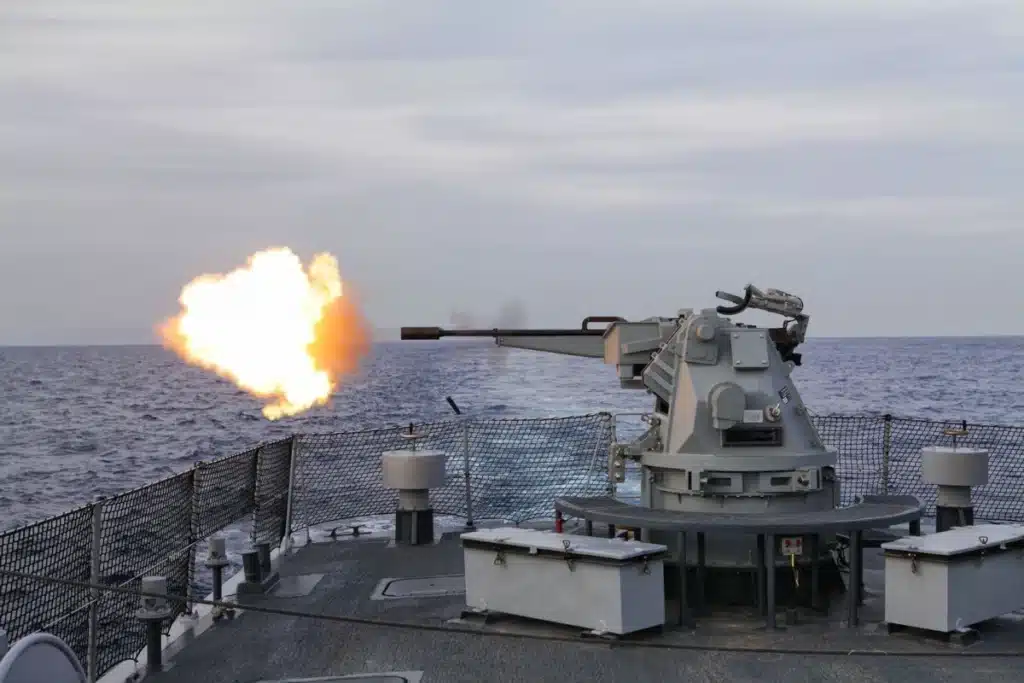
Navies are preparing to defend against increasingly deadly threats. Many surface ship classes are to be shaped-up to better defend against the threat posed by any kinds of kinetic weapons. Hard-kill weapon systems form a significant element of the detect-control-engage chain at sea.
To be clear, completely new forms of threats will influence the character of naval warfare in the 2020–2030-era naval battle. Multiple coordinated attacks, capable of saturating the defence, or short-range missiles fired from shore batteries, are threats in which traditional long-range defence may have difficulties ensuring full protection. But that’s not the complete story. Unmanned aircraft (unmanned aerial vehicles or UAVs) and ‘drone swarms’ need to be also addressed in naval doctrines. Most of them are getting smaller in size and are highly agile; thus, they are to be encountered by improved types of shipboard weapon systems. Among the new generation of shipboard weapons is the TYPHOON family of remotely-controlled weapon stations (RCWS) developed and manufactured by Rafael Advanced Defense Systems in Israel.
Rafael is best known for its full-fledged portfolio of softkill and hardkill weapon systems, among them the TYPHOON MLS-ER RCWS. It includes SPIKE-ER missiles, launchers, an electro-optical director and a fire control system. The lightweight, stabilised system can be installed on a variety of naval platforms, ranging from rigid hulled inflatable boats (RHIBs) to larger patrol boats and combat ships like corvettes and frigates.
Now, Rafael announced that it has delivered the 1,000th TYPHOON RCWS to naval customers around the globe. The RCWS is in use with 25 navies and maritime services, according to Rafael. The list of users includes the Israeli Navy, as well as the naval fleets of Australia, Canada and the United States. Rafael is offering its TYPHOON Mk30-c and TYPHOON 25 mm variants as a solution for airborne, marine and shore-based threats, also encompassing C-UAS – the defence against unmanned aerial systems (UAS).
The TYPHOON RCWS has already demonstrated its improved C-UAS capabilities using AI-powered automatic fire correction and advanced automatic target recognition (ATR) to effectively defeat small and medium UAS. This is all made possible by incorporating a diverse mix of synchronised smart multi-spectral sensors, weapons and intelligent effectors that translate to very high hit accuracies.
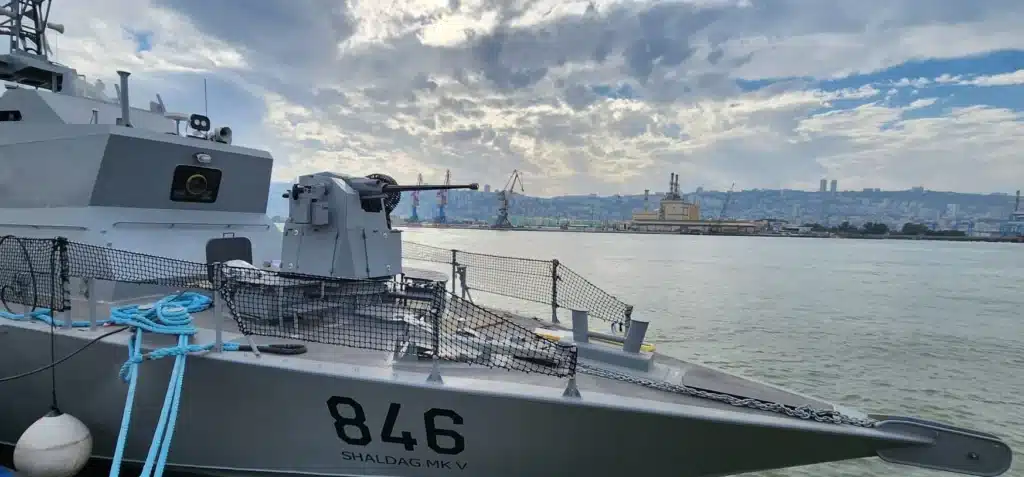
TYPHOON and Mini-TYPHOON RCWS have been in operational service with the Israeli Navy since 2000. As part of the ongoing cooperation between Rafael and the Israeli Navy, the technology leader in naval weapon systems recently delivered TYPHOON Mk-30c RCWS to the naval service to further strengthen the capabilities of its operational surface combatants, including the Magen class (SA’AR 6) corvettes. This is being facilitated as part of the continued upgrade and modernisation of the Israeli Navy’s surface fleet. Rafael expected additional sales in the coming years, replacing legacy systems currently being operated by the Israeli Navy, alongside the integration of new Mini-TYPHOON RCWS.
TYPHOON is a combat-proven asset. It offers an effective response to a range of threats in the naval/maritime combat environment, engaging both surface targets and aerial threats. In recent years, the weapon system has demonstrated its ability to defeat small, fast, low-signature threats, including UAS/UAVs, combining advanced fire control and tracking capabilities that enable detection, identification and precise engagement of threats within short timeframes.
TYPHOON features high-capacity ammunition magazines for sustained engagement, fast switching between ammunition types in accordance to the nature of the threat. It also offers automated capabilities that shorten response times and reduce operator workload. The weapon system supports advanced munitions, including air burst munition (ABM) and high-explosive proximity rounds, extending its effectiveness against both aerial and surface threats.
Like other naval systems on offer by Rafael, TYPHOON is based on a modular, mission-oriented design. This enables rapid adaptation to a wide variety of vessels and flexible integration according to the user’s needs.
Yoav Tourgeman, CEO and President of Rafael: “The delivery of the 1,000th TYPHOON system reflects the continued trust of navies and maritime forces worldwide in Rafael’s operational capabilities. At a time when the naval arena is becoming more congested, contested and relevant than ever, from the protection of vital shipping lanes to countering advanced aerial and naval threats, the ability to provide operational vessels with a precise, rapid and multi-layered response is a strategic necessity.”
He added: “The TYPHOON system, which has been operating for years in multiple operational arenas, demonstrates Rafael’s commitment to continue developing solutions that strengthen the freedom of action, protection, and superiority of naval forces in Israel and around the world.”