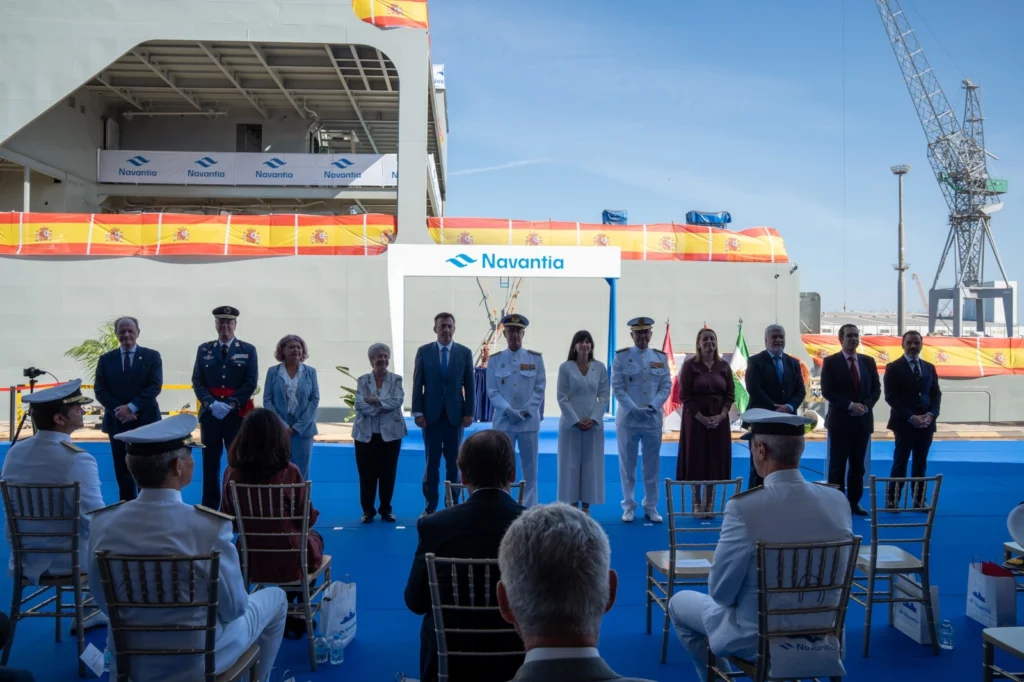

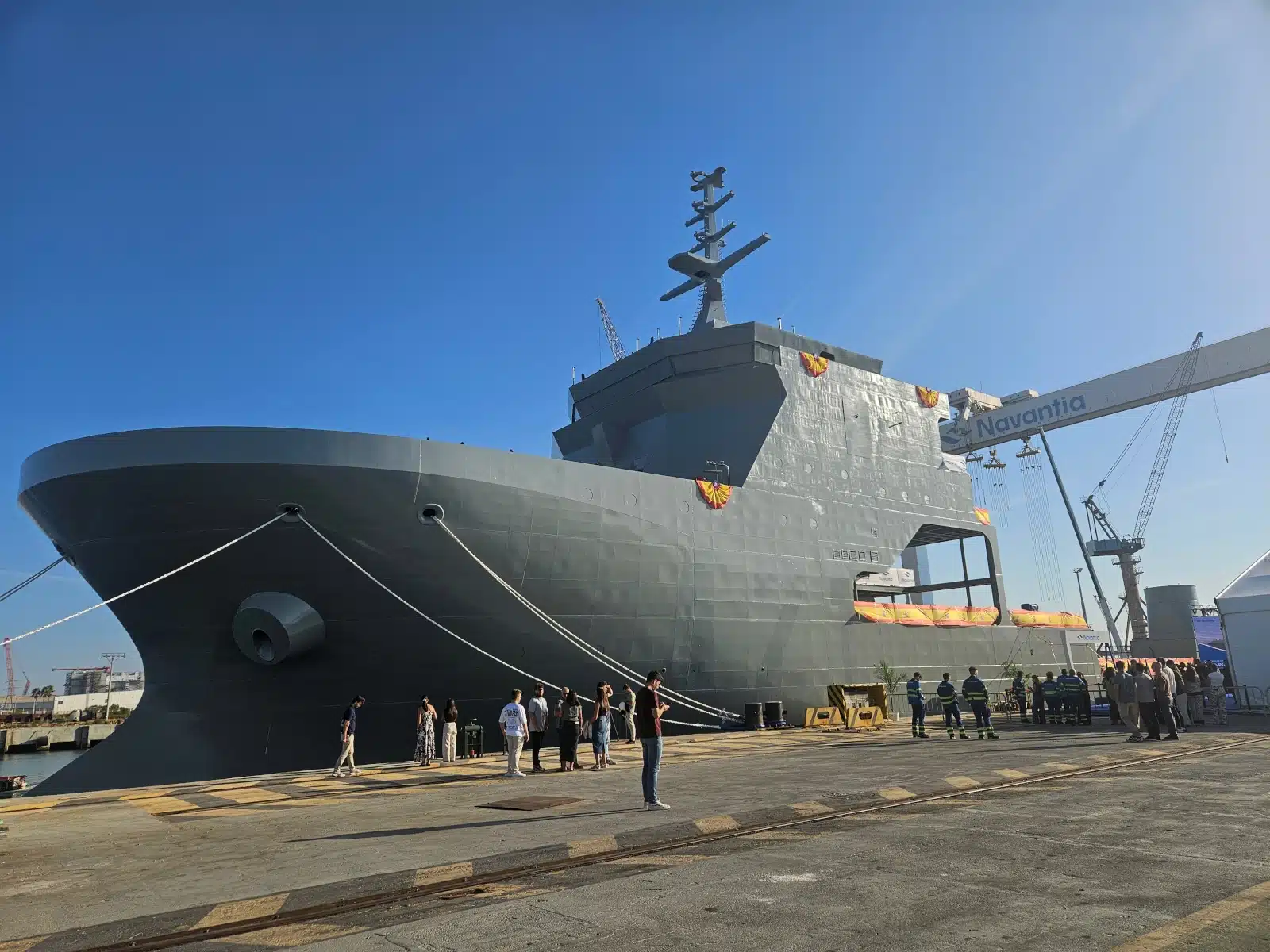
On 18 September, Navantia celebrated the naming ceremony of the Spanish Navy’s new Underwater Intervention Maritime Action Vessel (BAM-IS).
The new BAM-IS vessel – EPS Poseidón (A 21) – can deploy submarine rescue systems and remotely operated vehicles at depths of up to 3,000 metres, supporting Spain’s developing S-80 submarine fleet.
The ceremony follows the successful float-out of the vessel earlier last week at Navantia’s Puerto Real shipyard and marks a major milestone in a programme that will significantly strengthen the Spanish Navy’s (Armada) submarine rescue, diving support and underwater intervention capabilities.
Designed as the successor to the navy’s rescue and salvage vessel EPS Neptuno, the new BAM-IS vessel will become the service’s primary platform for underwater operations. The BAM-IS vessel combines a wide range of advanced systems within a single platform. It will be able to deploy a submarine rescue vehicle and conduct underwater inspection and intervention missions using remotely operated vehicles (ROVs) at depths of up to 3,000 metres.
The new vessel has been designed to perform deep-water underwater intervention using mixed-gas diving systems, underwater repair operations, recovery of submerged objects, search and identification missions, hyperbaric treatment of diving accidents, protection of underwater archaeological heritage and support to conventional naval operations. It will also play an important role in the training and certification of Spanish Navy diving units, including support to the Military Diving School.
Certified for allied rescue systems: One of the programme’s most significant achievements is the vessel’s MOSHIP certification, making the new BAM-IS vessel the first asset in the Spanish Navy capable of serving as a mother ship for both the NATO Submarine Rescue System (NSRS) and the US Navy’s Submarine Rescue Diving and Recompression System (SRDRS). This capability will strengthen Spain’s contribution to allied submarine rescue operations and enhances interoperability with NATO and partner fleets.
Admiral Antonio Piñeiro, Chief of Staff of the Spanish Navy, highlighted the programme as a clear demonstration of commitment to national technological development, underlining the value of cooperation between the navy and Spanish industry.
Speaking at the ceremony, Ricardo Domínguez, Chairman of Navantia, noted: “Poseidón possesses capabilities that make her truly unique. She is the result of the close collaboration between Navantia, the Ministry of Defence and the Spanish Navy to ensure that Spain maintains advanced and adaptable defence capabilities in an increasingly demanding strategic environment. The vessel also reflects our commitment to the Navy 2050 Plan and to strengthening both European defence and strategic autonomy.”
Photos: Navantia