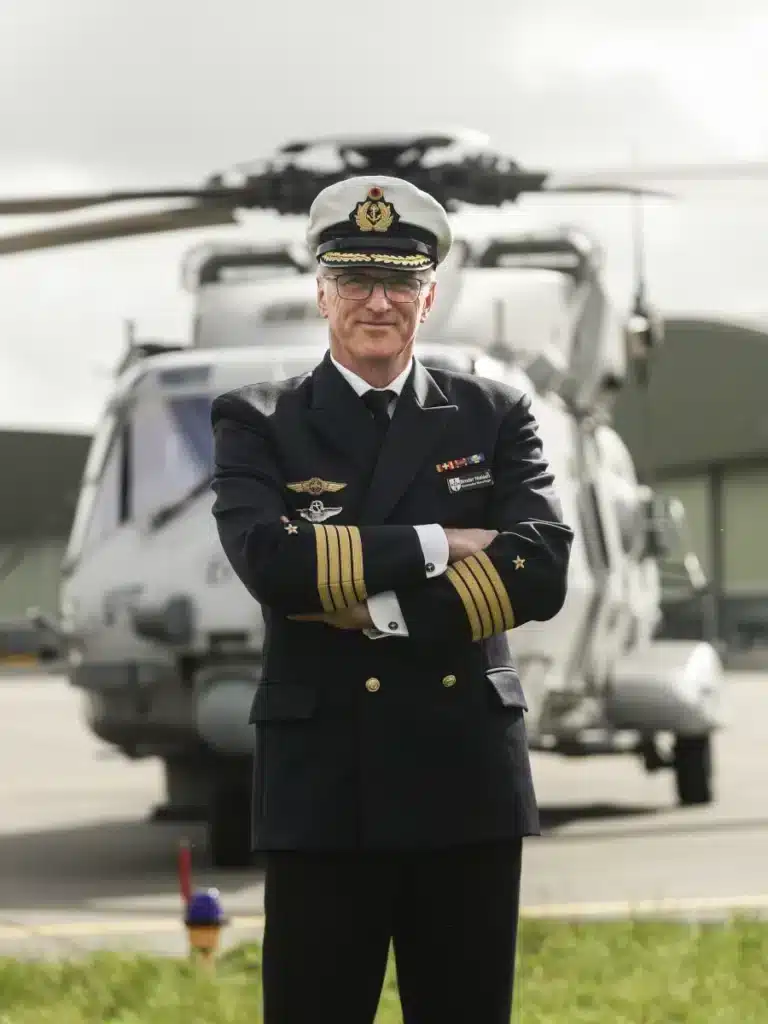

The procurement agenda for German Naval Aviation inspires optimism. It embodies the mission, vision and objectives of a major formation of the German Navy for the 2030s – featuring robust capabilities across all domains of aerial naval warfare. The era of unmanned systems has long since arrived in this sector. Naval Forces spoke with the Commander of Naval Aviation, Captain (Navy) Broder Nielsen, about how the German naval air arm has evolved into a reliable and significant force within NATO. With the introduction of new long-range maritime patrol aircraft, Naval Aviation will strengthen NATO’s collective deterrence capabilities in the North Atlantic and the Baltic Sea. The naval air arm is acquiring not only a manned platform capable of rapidly and effectively monitoring vast maritime areas but also a long-range, networked anti-submarine warfare (ASW) asset designed to detect, track and – if necessary – engage submarines.
Naval Forces: Commander, you have been in office since mid-November 2022 and look toward the future development of the Naval Air Arm with confidence. My first question concerns a matter destined to shape the profile of the Naval Air Arm for years to come: the renewed focus on national and alliance defence. What does this mean for the Naval Air Arm?
Captain Broder Nielsen: When I assumed command of the Naval Air Arm in the autumn of 2022, we were already facing a completely new reality in terms of security policy. Russia’s attack on Ukraine had made it unmistakably clear that peace in Europe could no longer be taken for granted. We are witnessing a return to power-political rivalry, the increasing militarisation of maritime domains and a growing threat to our critical infrastructure. The shift back to national and collective defence is not a short-term change in priorities, but a fundamental return to what is essential. This shift highlights the clear strategic importance of the Naval Air Arm.
Naval aviation assets are not a tactical supplement to the fleet; we are an integral part of NATO’s strategic deterrence. Our mission is to rapidly monitor vast maritime areas and to detect, track and – if necessary – engage hostile submarines. Russia’s modern nuclear-powered submarines, in particular, represent some of the most dangerous military capabilities in existence. Detecting them early and monitoring them continuously makes a direct contribution to Europe’s security.
That is why we are currently undergoing the most significant modernisation of the Naval Air Arm in over four decades. With the P-8A Poseidon, the NH90 Sea Tiger and – in the near future – the MQ-9B [SkyGuardian RPAS), we are acquiring more than just new aircraft. We are creating a fully networked maritime surveillance system that integrates manned and unmanned capabilities. This fundamentally transforms our operational capabilities and makes us an even more effective partner within NATO. Modernising the Naval Air Arm is a security imperative; it is not a luxury, but money well spent!
However, national and collective defence entails more than just modern technology. Above all, it signifies operational readiness – driven by well-trained personnel, reliable logistical support, robust industrial partnerships and close cooperation with our allies. Modern weapon systems only realise their true value when they are available at the critical moment.
At the same time, our own self-conception is evolving. While international crisis operations were the primary focus in recent decades, our attention has now shifted back to defending Alliance territory. This entails more demanding training, intensified multinational cooperation and significantly higher expectations for our service members. Physical and mental resilience are becoming just as important as the ability to rapidly analyse state-of-the-art sensor data and vast quantities of information.
In doing so, we must not lose sight of why we do all this. Germany is an export-oriented nation. Our prosperity depends on free and secure sea lanes; over 90 percent of our global trade is conducted via the sea. Maritime security is therefore no longer a military task – it is essential for safeguarding prosperity, ensuring supply security and maintaining our society’s resilience.
I am convinced that our naval aviation forces are exceptionally well-positioned for this. We have highly motivated men and women and outstanding expertise in ASW, and we enjoy an excellent reputation within NATO. We are now combining this experience with cutting-edge technology. That makes me not just optimistic, but truly confident.
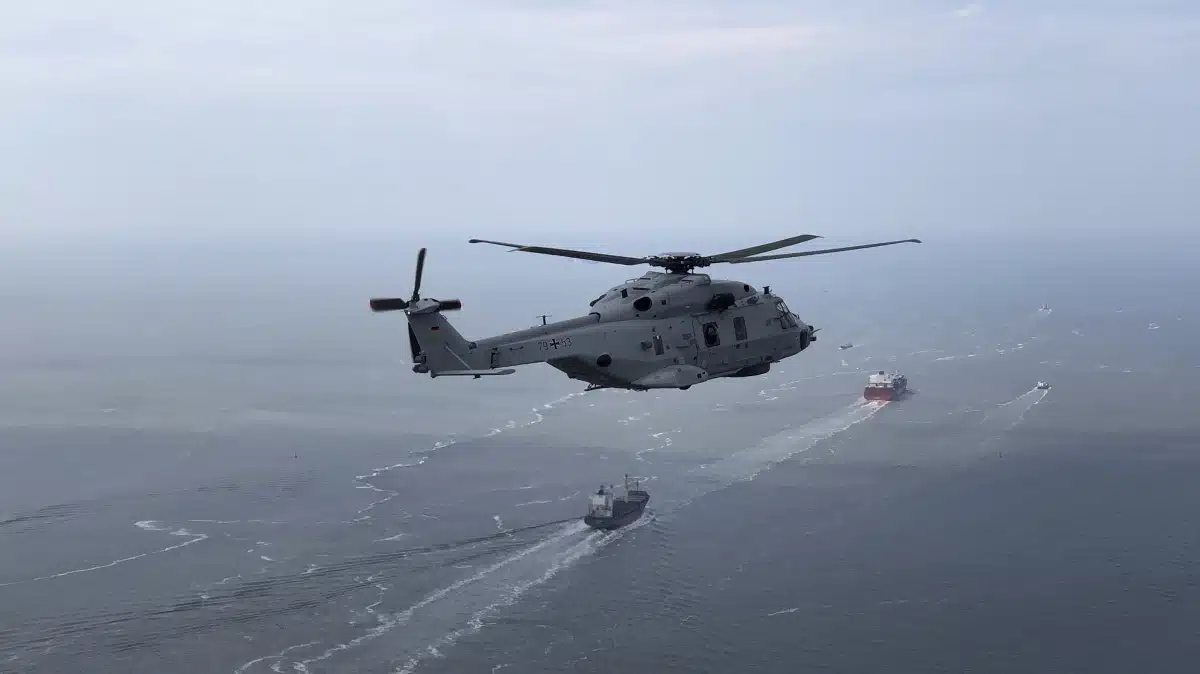
Photo: German Navy
Naval Forces: Naval aviation forces will extend their operational reach to maritime areas well beyond European territory. The reason: future conflicts – including in dealings with China – demand the global projection of naval power. How are naval aviation forces adapting to this, and in what way will they position themselves in the Indo-Pacific region – alongside friends and partners sharing the same values, such as India, Australia and Japan?
Captain Broder Nielsen: The primary focus of German naval aviation remains NATO’s northern flank. Our area of responsibility encompasses the North Atlantic, the North Sea and the Baltic Sea. These waters contain critical sea lines of communication [SLOCs] between North America and Europe and essential subsea infrastructure; they are also where we observe the highest levels of Russian submarine activity.
At the same time, however, it would be a mistake to view maritime security solely through a regional lens. Maritime security must always be considered from a global perspective. The trade flows that sustain our economy extend far beyond Europe. Events in the Red Sea, the Indian Ocean, or the Western Pacific have a direct impact on our security of supply and our national economies.
Consequently, our naval aviation forces must be capable of operating worldwide. The initial deployment of a P-8A Poseidon to India earlier this year was far more than a symbolic flight. It demonstrated Germany’s ability to rapidly deploy state-of-the-art maritime capabilities over vast distances and operate them alongside international partners. For us, this also served as a crucial test of our logistics processes, the quality of our training and our multinational interoperability. The P-8A opens up entirely new possibilities in this regard. It is operated by numerous partners, including the US, the UK, Norway, Australia, New Zealand, Canada, India and Denmark. This creates a global network characterised by shared training, standardised procedures, logistical support and operational cooperation. Germany is becoming part of this network while contributing its decades of expertise in ASW.
For naval aviation, this means adopting an increasingly international mindset. Our crews will train more frequently with partners, our logistics must function on a global scale, and our training must align with international standards. Interoperability will no longer be an optional extra; it will become the ultimate norm. I am convinced that our naval aviation forces will successfully pursue this path. We bring not only modern systems to the table but, above all, highly trained personnel. And it is precisely these people who will continue to be the decisive success factor in any international cooperation.
Naval Forces: The first P-8A maritime patrol aircraft recently arrived at Lufthansa Technik Defense in Hamburg for scheduled maintenance checks. Did the deployment of the first aircraft to the Indo-Pacific mark the beginning of a much larger engagement in the region?
Captain Broder Nielsen: The deployment of our first P-8A to the Indo-Pacific was, first and foremost, a clear commitment to international cooperation. At the same time, however, it demonstrated the potential this aircraft holds for German security and alliance policy.
This mission was extraordinary in several respects. It marked the very first operational long-range deployment of this newly introduced weapon system. Furthermore, we had to demonstrate – on very short notice – that we were capable of operating globally, not just in terms of flight operations but also logistically. It is precisely this second aspect that is often underestimated. Modern air forces are only as capable as their logistical networks. That is exactly why cooperation with industry is of such vital importance. Operational readiness does not begin on the airfield; it starts with maintenance, spare parts supply, engineering and robust industrial partnerships. If we intend to operate globally in the future, we need reliable partners capable of supporting our systems outside Germany as well. Today, this industrial resilience is just as crucial a component of defense capability as the aircraft itself.
I therefore view our cooperation with Lufthansa Technik Defense as more than just a standard maintenance contract; it is part of a new approach to security policy. Government and industry must work together more closely than in the past. The armed forces cannot fulfill their missions alone. At the same time, companies require planning certainty, long-term partnerships and mutual trust.
Whether we maintain presence in the Indo-Pacific more frequently in the future will ultimately depend on political decisions and security developments. I am convinced that Germany, as a trading nation, will continue to have a legitimate interest in free and secure sea lanes. Our task as naval aviators is to provide the capabilities necessary to ensure this.
The P-8A is an ideal tool for this purpose. It combines long range, high speed and state-of-the-art sensor technology with a high degree of interoperability with numerous partner nations. This allows us to be deployed flexibly wherever our capabilities are needed – without losing sight of our core mission on the northern flank.
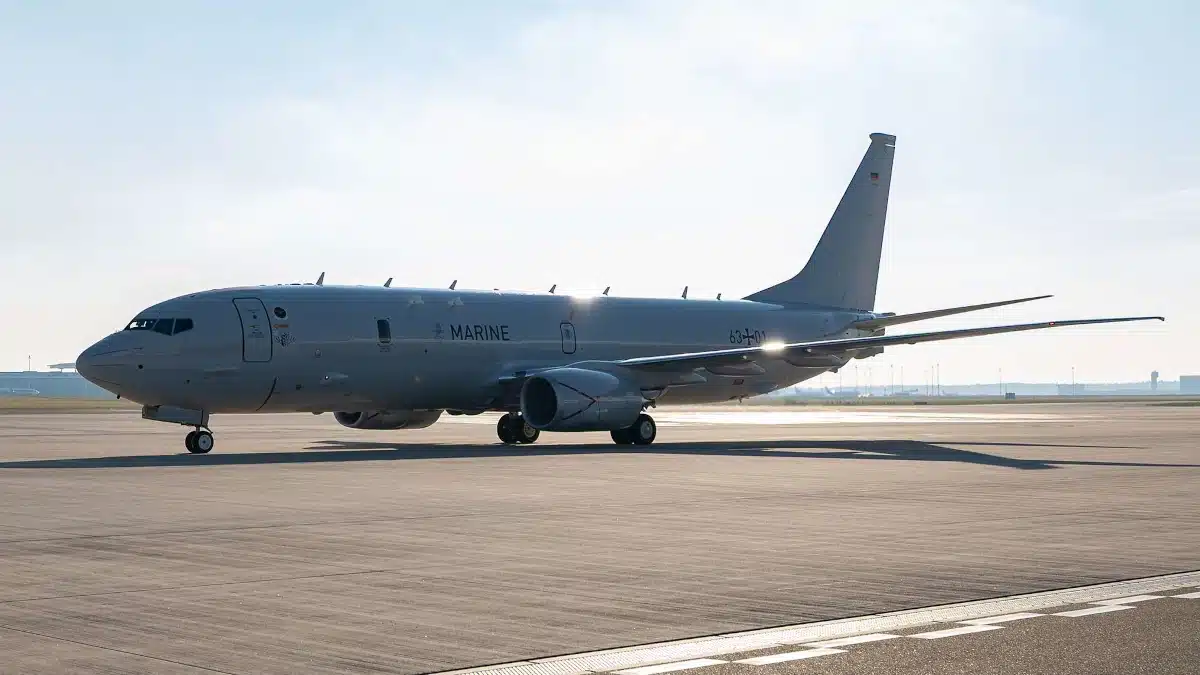
Photo: German Armed Forces/Christoph Kassette
Naval Forces: During your visit to Lufthansa Technik Defense, your keynote address indicated that the security-policy significance of the Naval Air Arm will continue to rise as a result of the procurement of the P-8A and other systems, such as the MQ-9B. Does this bring new cooperation models into play? I am referring to the British-German Friendship Treaty (of July 2025), which clearly shows that the German Naval Air Arm will take on new tasks – including stationing long-range maritime patrol aircraft in Scotland – such as wide-area maritime surveillance and anti-submarine reconnaissance.
Captain Broder Nielsen: I am convinced of this. Modern military capabilities no longer emerge within national borders; they develop within multinational networks.
The Trinity House Agreement and the P-8A Poseidon serve as excellent examples of this. The P-8A is operated by a growing number of partner nations. This opens up tremendous opportunities for joint training, standardised operating procedures, spare parts logistics, software development and further advancement of sensor technology. Through this, Germany becomes part of an international user community where experiences can be shared directly.
Added to this is the introduction of the MQ-9B. Here, too, we intend to cooperate closely with other nations. This system will not replace our manned platforms but rather complement them effectively. The future of maritime surveillance lies in the intelligent collaboration between manned and unmanned systems. While a drone can monitor vast maritime areas for many hours or even days, the P-8A contributes its exceptional sensor suite, high mobility and armament capabilities. The interplay between the two systems creates additional operational value.
It is against this backdrop that we should view the deepened cooperation with the United Kingdom. The planned temporary deployments of German P-8As to Lossiemouth – as well as intensified cooperation in mission execution and potential future joint armament – exemplify how capabilities can be shared and further developed together in the future. Particularly in the fields of ASW and long-range maritime reconnaissance, this creates new possibilities for jointly monitoring and protecting the North Atlantic and NATO’s northern flank.
Naval Forces: With these new capabilities, naval aviation is becoming a sought-after partner – particularly when it comes to establishing a presence on NATO’s northern flank, and specifically in the Arctic. Alongside the UK and Norway, Canada and Denmark are now also entering the picture. Would this require strengthening other core capabilities of naval aviation – capabilities that were developed in earlier decades?
Captain Broder Nielsen: NATO’s northern flank and the North Atlantic have gained significant importance in terms of security policy in recent years. They form the link between North America and Europe and are thus central to the Alliance’s defense capabilities. At the same time, we are observing increasing military activity in the High North and the Arctic.
Knowledge of our operational area is therefore of crucial importance. The North Sea, the Baltic Sea, the Norwegian Sea and the GIUK [Greenland, Island, UK] Gap each present distinct hydrographic conditions. Water temperature, salinity and stratification directly influence sound propagation – and thus the success of any ASW operation. Understanding these environments provides a decisive operational advantage. Germany possesses a decade-long tradition in ASW, and our crews enjoy an excellent reputation within NATO. This expertise is a strategic asset that we must both preserve and further develop.
However, the operating environment today differs significantly from that of previous decades. Modern maritime operations are far more networked and multinational in nature. The challenges have become more complex: modern submarines operate more quietly and effectively, threats increasingly emerge in the hybrid domain and vast amounts of information must be processed much more rapidly. Consequently, the decisive factor is not merely the performance of individual platforms, but how they operate together within a multinational framework.
There is, however, one capability that must be strengthened without fail: the ability to engage surface vessels from the air. The procurement and deployment of modern, long-range anti-ship missiles must therefore be accelerated as a matter of urgency. Yet, people remain more important than modern technology; highly qualified aircrew and technical personnel form our foundation. Intensive training and regular multinational exercises lay the groundwork for us to fully deploy our capabilities in actual operations. Exercises with partners such as the UK, Norway, Canada and Denmark therefore serve purposes that go beyond mere training. They foster mutual trust, shared procedures, and a common understanding of the situation – prerequisites that are of critical importance well before an alliance contingency arises.
Naval Forces: Where do capability gaps still exist?
Captain Broder Nielsen: Naval aviation is currently undergoing a phase of comprehensive modernisation. We have made enormous progress in recent years. Nevertheless, it would be unrealistic to claim that we have already reached our goal. The major challenge lies in implementing this technological modernization drive across all areas simultaneously. New aircraft alone are not enough; they require modern simulators, robust infrastructure, trained personnel, digital command and analysis systems, as well as reliable logistics processes. These elements must all be available at the same time.
In addition to these capabilities, digitisation and networking represent another major area of development. The future lies primarily in the intelligent interaction of a wide variety of sensors and effectors. In the future, manned and unmanned systems will jointly gather and process information – making it available for mission execution – thereby transforming the way long-range maritime reconnaissance is conducted.
However, it is not just about sensors and situational awareness; it is also – and especially – about the weapon’s effect on the target. Regaining the capability for potent anti-surface warfare [ASuW] must be pursued just as vigorously as our capability for ‘deep precision strikes’ using long-range missiles.
We are still in the early stages regarding unmanned systems. The MQ-9B opens up entirely new possibilities for persistent maritime surveillance. In the long term, manned and unmanned systems will work closely together and complement one another. This development will fundamentally change how we conduct operations. There is also a need to develop unmanned helicopters with sufficient payload capacity. Despite the incredible pace of drone development, there is unfortunately no off-the-shelf solution available in this area yet.
At the same time, simply introducing our own unmanned systems is not enough. We must also develop the capability to detect, positively identify and effectively counter hostile drones at an early stage. Developing counter-UAS capabilities is therefore an essential component of future operations. This is relevant for both the armed forces and civil protection.
Personnel remains another challenge. High-tech systems require highly trained specialists: pilots, sensor operators, technicians, software experts and data analysts. We are constantly competing with the civilian sector, yet I am deeply convinced that – thanks to outstanding working conditions and modern equipment – we are a highly competitive employer. To drive naval aviation forward with these people, my greatest wish is simply greater speed: speed in procurement, infrastructure development, training and industrial supply chains. Only through speed and dynamism can we generate security. It is created anew every day – through combat-ready service members, modern capabilities and strong partners. That is precisely what we are working on with great passion.
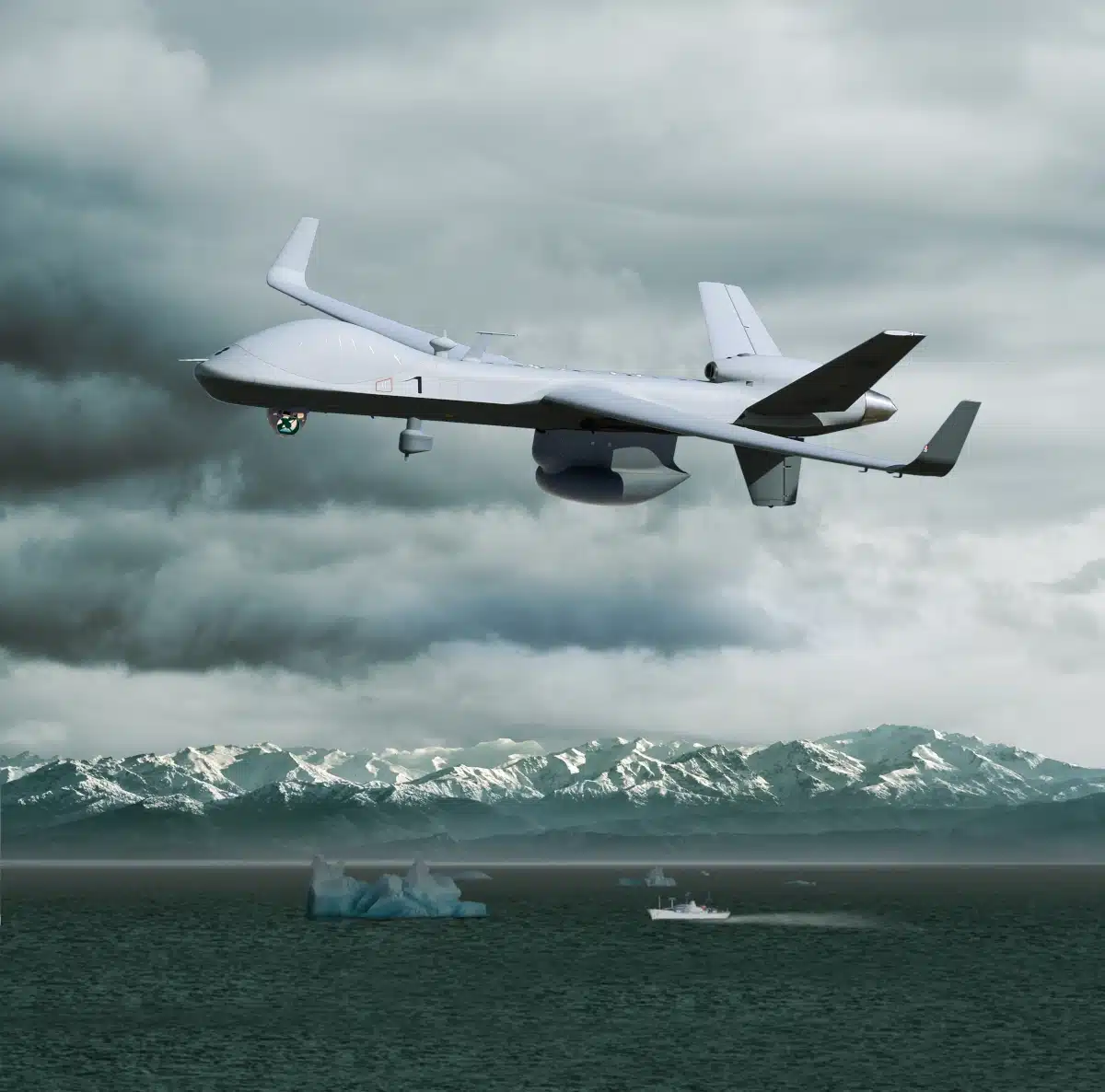
Photo: General Atomics Aeronautical Systems